Introduction
The COVID-19 pandemic marked one of the most dramatic disruptions to modern economic and social systems in the twenty-first century. Virtually overnight, cities across the world experienced a forced experiment in remote work as offices closed, travel halted, and millions of employees shifted to working from home. According to the 2021 report by McKinsey & Company titled The Future of Remote Work, the pandemic accelerated workplace transformations that might otherwise have taken a decade to unfold. What began as a temporary emergency response quickly evolved into a structural shift in how organizations operate, where people live, and how cities plan for the future. This transformation has had profound implications not only for corporate culture and technology adoption but also for the spatial organization of cities and the future of office real estate.

The Pandemic
In early 2020, the pandemic forced governments to implement sweeping shutdowns to contain the spread of the virus. Offices, retail centers, schools, and public spaces abruptly closed across the United States, and around the world. Major metropolitan regions such as New York, Los Angeles, Chicago, and San Francisco—long recognized as economic engines driven by dense office districts—were suddenly quiet. The traditional model of centralized workplaces was no longer viable as health concerns and lockdowns prevented employees from gathering in shared spaces. Companies that had previously relied on in-person collaboration were compelled to adopt remote work technologies almost immediately. Millions of workers found themselves setting up temporary home offices at kitchen tables, spare bedrooms, or improvised workstations.
Prior to the pandemic, remote work had existed but was limited to certain industries and roles. Many organizations were hesitant to adopt it broadly due to concerns about productivity, supervision, and collaboration. The pandemic eliminated that hesitation by necessity. According to McKinsey’s analysis, the share of remote work in the United States increased dramatically during 2020 as companies rapidly digitized operations and reconfigured workflows. Tasks once assumed to require physical presence—meetings, design reviews, financial reporting, and even complex collaboration—were conducted through video conferencing platforms and cloud-based software. Technologies such as Zoom, Microsoft Teams, Slack, and collaborative digital workspaces became essential infrastructure for daily operations.
This rapid technological adoption fundamentally altered workplace dynamics. Employees and employers discovered that many functions could be performed effectively outside the traditional office. McKinsey estimated that a significant portion of work activities in advanced economies could be performed remotely at least part of the time. Knowledge-based sectors such as finance, professional services, software development, marketing, and design proved particularly adaptable to remote environments. As a result, organizations began to reconsider the necessity of large centralized offices and daily commuting.
One of the most visible consequences of remote work was the geographic dispersion of workers. During the pandemic, many residents of dense urban centers began relocating to suburban or smaller metropolitan areas. Cities such as New York, Los Angeles, Chicago, and San Francisco experienced temporary population declines as workers sought more space, lower housing costs, and improved quality of life. The ability to work remotely allowed employees to prioritize housing affordability, family needs, and environmental preferences rather than proximity to downtown offices.
This migration pattern revealed how strongly traditional office structures had shaped urban geography. For decades, cities concentrated employment in central business districts, creating high demand for nearby housing and daily commuting patterns. Remote work disrupted that logic by decoupling employment from location. Workers could remain employed by firms headquartered in major cities while living hundreds or even thousands of miles away. This shift introduced a new level of flexibility into the labor market and prompted businesses to reconsider hiring strategies, geographic talent pools, and long-term office requirements.
Technology played a critical enabling role in this transformation. The pandemic accelerated digital infrastructure investments across industries. Cloud computing, cybersecurity systems, virtual collaboration tools, and digital project management platforms became the backbone of remote operations. Companies that previously relied on physical servers, in-person meetings, or paper-based processes rapidly modernized their systems. The pace of digital transformation during 2020 and 2021 was unprecedented. Many organizations reported completing years of planned technology adoption in a matter of months.
At the same time, remote work also exposed new challenges. Workers experienced varying levels of productivity depending on home environments, caregiving responsibilities, and access to reliable internet. Collaboration and mentorship were more difficult to replicate in virtual environments, particularly for younger employees or new hires. Companies also faced cultural challenges as organizational identity and team cohesion became harder to maintain without shared physical spaces. As a result, many organizations began exploring hybrid work models that combine remote flexibility with periodic in-office collaboration.
The implications of remote work extend far beyond corporate management practices. One of the most significant impacts has been on commercial real estate markets. Central business districts that once housed millions of daily commuters suddenly faced declining office occupancy rates. Many companies reduced their office footprints, renegotiated leases, or adopted flexible workspace strategies. In some cities, office vacancy rates reached levels not seen in decades.
For urban planners, developers, and policymakers, this shift presents both challenges and opportunities. Declining demand for office space has raised concerns about the economic vitality of downtown districts that rely on office workers to support restaurants, retail, and public transit systems. However, the surplus of underutilized office buildings also creates a potential pathway to address one of the most pressing urban challenges: housing shortages.
Across many American cities, the demand for affordable and workforce housing has dramatically outpaced supply. The pandemic-induced shift toward remote work has opened the possibility of converting obsolete or underutilized office buildings into residential units. Adaptive reuse strategies—transforming commercial buildings into housing, mixed-use developments, or community spaces—are increasingly being explored by developers and city governments. Such conversions can help revitalize downtown areas while simultaneously addressing housing needs.
Adaptive reuse aligns with broader urban development principles focused on sustainability and resilience. Rather than demolishing outdated office structures, cities can repurpose them to create vibrant mixed-use neighborhoods. Converting office towers into apartments or condominiums can bring new residents into downtown districts, supporting local businesses and increasing urban vitality. In many cases, these conversions also reduce environmental impacts by reusing existing building materials and infrastructure.
The transformation of office real estate also raises broader questions about the future design of workplaces. Instead of large centralized headquarters, many companies are experimenting with smaller collaboration hubs, shared workspaces, or distributed office networks. Offices are increasingly being designed as places for creativity, team building, and strategic planning rather than routine individual tasks. In this emerging model, employees may visit the office only periodically while completing focused work remotely.
Urban development patterns are likely to evolve alongside these changes. If remote and hybrid work arrangements remain common, cities may experience more distributed growth patterns rather than concentrating employment in a single downtown core. Secondary neighborhoods and smaller cities may attract new residents seeking quality of life, affordability, and access to natural environments. At the same time, major metropolitan areas will continue to play important roles as centers of culture, innovation, and economic activity.
The pandemic also revealed the resilience and adaptability of cities. Despite temporary disruptions, urban environments remain vital hubs of creativity, entrepreneurship, and social interaction. The shift toward remote work does not eliminate the importance of cities; rather, it encourages a rethinking of how urban spaces function. It opens downtown districts to evolve into more diverse environments that combine housing, cultural institutions, entertainment venues, and flexible workplaces.
Ultimately, the pandemic accelerated a transformation that was already underway. Advances in digital technology had been gradually loosening the connection between work and place for decades. COVID-19 forced organizations to adopt these tools at scale and demonstrated that many jobs could be performed effectively outside traditional offices. As McKinsey’s research suggests, the future of work will likely involve a hybrid model that balances remote flexibility with in-person collaboration.
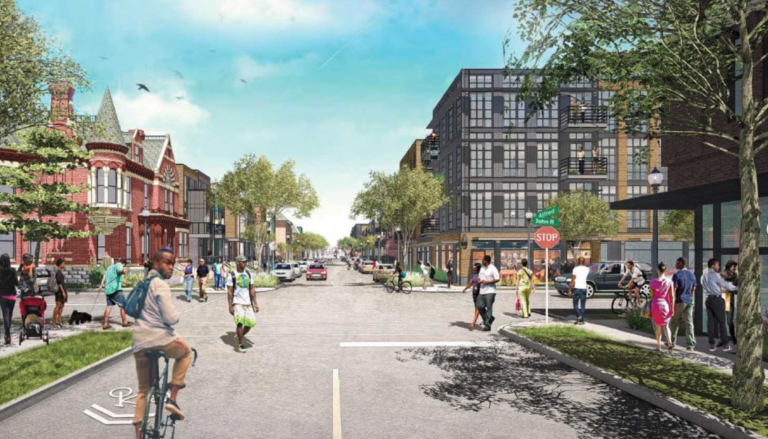
For urban planners and developers, the implications are significant. The changing nature of work invites a new generation of adaptive reuse projects, mixed-use developments, and human-centered urban design strategies. Vacant office buildings may become housing, cultural venues, or innovation centers. Downtown districts may transform into vibrant communities where people live, work, and socialize rather than simply commute to offices.
In this sense, the pandemic did more than disrupt existing systems—it created an opportunity to rethink the relationship between work, technology, and the built environment. The challenge for cities moving forward is to harness these changes in ways that promote economic resilience, social equity, and sustainable urban development. Remote work, once viewed as an emergency response, may ultimately become a catalyst for more flexible, inclusive, and adaptive cities in the decades ahead.